Introducing factget: web and document data where every value has a receipt
Why we are building factget, the problem with research collected by hand, and the five products that turn websites and documents into data you can check.
- announcement
- research automation
- web data
- document extraction
- data provenance
Important decisions often rest on the public record: a county ordinance, a regulatory filing, a company's website, a table on page 40 of an annual report. The information is out there. Getting it into a form a team can use, and trusting it once it is there, is the hard part.
factget exists to do that work: turn websites and documents into structured data, with the evidence attached. Our short version is get the facts, keep them current.
The problem we are solving
Most research that depends on public sources is still collected by hand. Someone opens the sites, finds the right page, reads the PDF, retypes the numbers into a spreadsheet, and moves on to the next source. It is slow, and it does not stay done: when the work has to be repeated next quarter, it starts again from scratch.
Two things get lost along the way.
- Where each value came from. A cell in a spreadsheet rarely says which page it was read from, what the page said, or when. When someone asks how do we know this?, the answer means redoing the search.
- Whether it is still true. Sources change after the work is done. Pages are edited, documents are replaced, registers are updated, and nothing tells you.
AI assistants have made answers fast, but an answer that cannot be traced back to its source is hard to defend in an investment memo, a siting study or a compliance review. Speed alone does not solve the problem. Evidence does.
Our aim: every value with a receipt
factget returns every value with a receipt: the source it came from, the words it was read from, when it was read, and its status. What could not be confirmed is not filled in with a guess. It stays empty and is flagged, so the gaps are as visible as the findings.
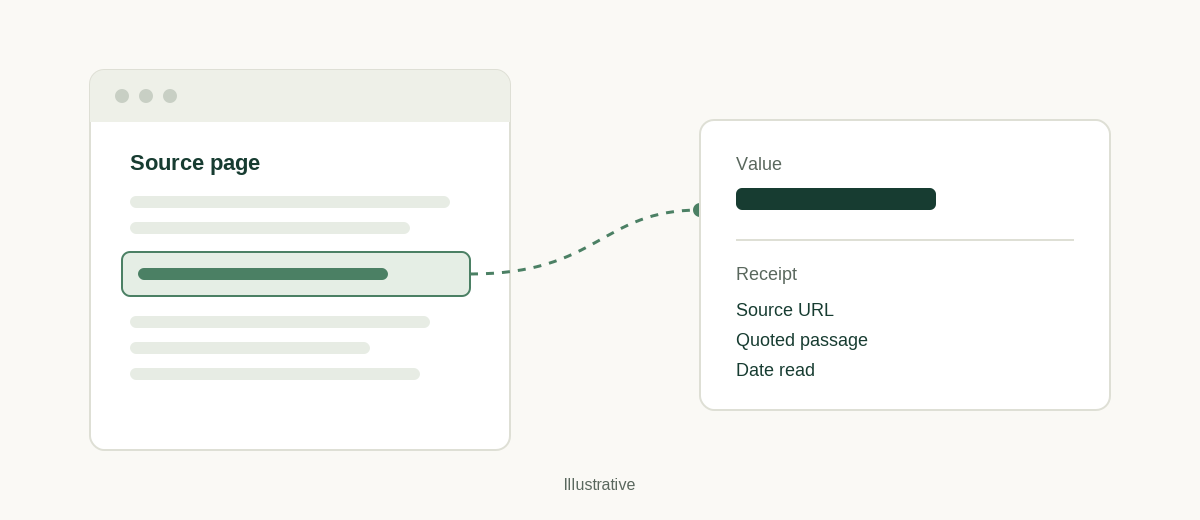
Receipts make the work checkable by the people who rely on it, and they make it repeatable: when a source changes, you can see which values it touches.
What we offer
factget is one platform with five products. They share one engine for reading the web and one for reading documents, so the same care goes into a research session, an API call or a scheduled check.
ARIA: research that shows its work
ARIA is our research workspace and the product we lead with. Describe the dataset you need in plain language. ARIA plans the work, finds the sources, operates real websites, reads the documents and brings back a structured table and editable reports (Word, PowerPoint, Excel or PDF), with a numbered citation on every factual claim. Details it could not verify are flagged for review.
You can watch it work: the plan, each step and a live view of the browser. Research can be run again on a schedule, and ARIA learns how each site works as it goes, so repeat runs can cost up to 90% less from the second run.
Crawl: the web as clean data
Crawl is a web data API and MCP server. Scrape a page, map a site, or crawl a whole website, and get markdown, HTML, links or extracted fields back, with asynchronous jobs and signed webhooks for larger work. Requests are Firecrawl v1-compatible, so an existing integration can switch by changing its base URL and key. Crawl always respects robots.txt, never solves CAPTCHAs and blocks private networks.
Docs: documents into verifiable data
Docs is a document data API. It parses PDFs, scans, Office files and spreadsheets, and extracts the fields you describe, in words or with a JSON Schema. Every value comes back with the page and quote it was read from and a status (found, not found, ambiguous, invalid or missing), so doubtful fields stay visible instead of being guessed.
Monitoring: know when a source changes
Monitoring watches the pages your work depends on: a whole page, one element, a list, or a plain-language description of what matters. It keeps dated snapshots, shows the passage that changed, and tells a changed value apart from a page that broke.
Datasets: maintained tables with receipts
Datasets are tables built and kept current by ARIA from public records. Follow the jurisdictions, companies or projects you care about, read every value with its receipt through the console, the API or an MCP server, and hear when a value changes.
Who it is for
factget is built for teams whose decisions rest on the public record: energy and infrastructure teams working on siting, interconnection and power policy, lenders and infrastructure investors, life-sciences teams scouting assets, and policy researchers. It is also built for developers who need clean web and document data for their own agents and data pipelines, through REST APIs and MCP servers.
What comes next
This blog is where we will write about how the products work and the techniques behind them: reading difficult documents, collecting data from websites politely, keeping datasets current, and making each value checkable.
To try factget, request access or sign in. Developers can start with the developer hub.